


What South Africa and the SADC region must do to convert mining revenues, the Cape route surge, and unprecedented mineral leverage into structural advantage that outlasts the crisis
I. The Asymmetry That Defines This Moment
Southern Africa is the region where the asymmetry of the Iran war is most striking and most analytically instructive. South Africa is simultaneously absorbing a rand depreciation, watching its port infrastructure strain under a surge of diverted global shipping it was not designed to handle, and managing inflationary pressure that has taken rate cuts off the table — while its gold sector is generating revenues on a scale that, if deployed intelligently, could reshape the country’s industrial base within a decade. Zambia and Zimbabwe hold minerals that the US-China competition over the energy transition has made indispensable. Angola and Mozambique are oil and gas producers whose revenues are rising precisely because global supply is disrupted. Botswana’s diamond wealth provides regional financial stability. The DRC’s cobalt and copper have never been more strategically valuable.
And yet, the structural question that hangs over all of this is the one I have raised repeatedly in these pages: whether the institutional, regulatory, and political architecture of the region can respond at the speed the opportunity demands. The SADC framework has historically been a less operationally active vehicle than ECOWAS or the EAC — closer to a diplomatic consultative forum than a coordinated economic bloc. The Iran war has given SADC its clearest argument in years for upgrading from consultation to coordination. Whether that argument is used is a political question that SADC governments will answer through their behaviour in the next eighteen months.
II. The R350 Billion Question
The Econometrix estimate of R300 to R350 billion in additional gold and platinum group metals revenues from the Iran conflict represents the largest single economic opportunity in South Africa in years. ARM Platinum’s headline earnings increased by over 200% in a single reporting period. Gold crossed $5,400 per ounce. The PGM demand, driven by geopolitical instability and industrial-cycle investment, is sustained and real. Standard Bank’s group head of macroeconomic research noted that the impact of higher oil prices on growth and the current account would be diluted by rising coal prices and spiking precious metals prices — a structural offset that distinguishes South Africa from every other net oil importer on the continent.
The challenge, which the Iran war illuminates but did not create, is that South Africa’s mining sector operates at approximately 10% below its 2010 production levels. The ore bodies have not moved. This is not a geological problem. It is a regulatory and infrastructure problem: slow licensing processes, Eskom’s chronic inability to guarantee the power supply required by energy-intensive extraction, and a general environment of policy uncertainty that rational investors price as a sovereign risk premium. The windfall that Econometrix has estimated will not materialise at the projected scale unless the state removes the production constraints at emergency speed.
The minerals are in the ground. The market is at its most receptive in fifteen years. The windfall is real — but it is contingent on a regulatory and infrastructure responsiveness that the sector has been requesting for a decade and receiving at the pace of a consultative process. The Iran war does not create that urgency. It makes the cost of not responding to it measurable in rand.
The specific actions are known and have been debated exhaustively. The Minerals Council has published them. The Presidential Mining Working Group has endorsed them. What is required is the executive decision to treat mining licensing turnaround time as a national security matter, to publish and enforce a binding Eskom power supply agreement for mining operations, and to establish a single-window investment facilitation office for projects above a defined threshold that eliminates the inter-departmental delays that have become the sector’s defining operational grievance. None of these requires new legislation. They require political will expressed as an administrative priority.
III. The Cape Route: South Africa Must Stop Being a Pass-Through


The 112% increase in diverted vessels at Cape Town is a demand signal, not an achievement. A vessel that arrives at a South African port, refuels, and leaves within hours is generating port revenue. A vessel that arrives, transships cargo, processes goods for the SADC hinterland, undergoes scheduled maintenance at a competitive ship repair facility, and departs after three days in a full-service maritime hub is generating economic activity that compounds through the local economy — in logistics, in ship repair, in cold chain services, in port-adjacent manufacturing, in the service industries that crew members and port workers spend money in. The difference between the two scenarios is not geography. It is investment and institutional capacity.
South Africa built salvage and ship repair capability over decades, serving a global maritime industry that used the Cape as a routine transit point. It then allowed that capability to atrophy through under-investment, loss of specialised institutional knowledge, and failure to maintain the equipment the industry requires. Simon’s Town and Cape Town’s repair facilities are shadows of what they were. The Iran war has created a second opportunity to rebuild them, at a moment when the global shipping industry has a structural incentive — not a temporary emergency preference — to use Cape route facilities because the alternatives are genuinely dangerous.
South Africa was once a salvage and ship repair hub. It allowed that capability to atrophy. The Iran war has created a second chance to build it — but only if the response is faster than the shipping industry’s patience for unreliable ports.
This opportunity will not persist indefinitely. If South African ports are not competitive within eighteen to twenty-four months, global shipping lines will build their Cape route service architecture around Mauritius, the Canary Islands, or Walvis Bay, where turnaround reliability is better. The window is real and specific.
The Cape Maritime Corridor Authority
The proposal: fast-track the establishment of a Cape Maritime Corridor Authority — a public-private body with a single mandate to make Cape Town, Port Elizabeth/Gqeberha, and Durban collectively competitive as transhipment and maritime services hubs within three years. This is not a new bureaucratic layer. It is the consolidation of existing mandates and budgets into a single accountable institution with a performance contract, public quarterly reporting, and the authority to override interdepartmental delays that currently slow port investment decisions relative to the commercial opportunities they are meant to capture.
Second: commission the rehabilitation of ship repair and salvage capability at the Cape Town and Simon’s Town facilities, financed through a combination of sovereign investment and private maritime services concessions with performance obligations. Third: negotiate service-level agreements with at least five global shipping lines currently rerouting around the Cape, making scheduled South African port calls a contractual commitment with turnaround guarantees. Those negotiations will fail if the ports cannot currently meet the turnaround guarantees. The rehabilitation and the negotiation have to happen in parallel.
IV. The DRC and the Minerals Negotiation That Defines the Next Decade

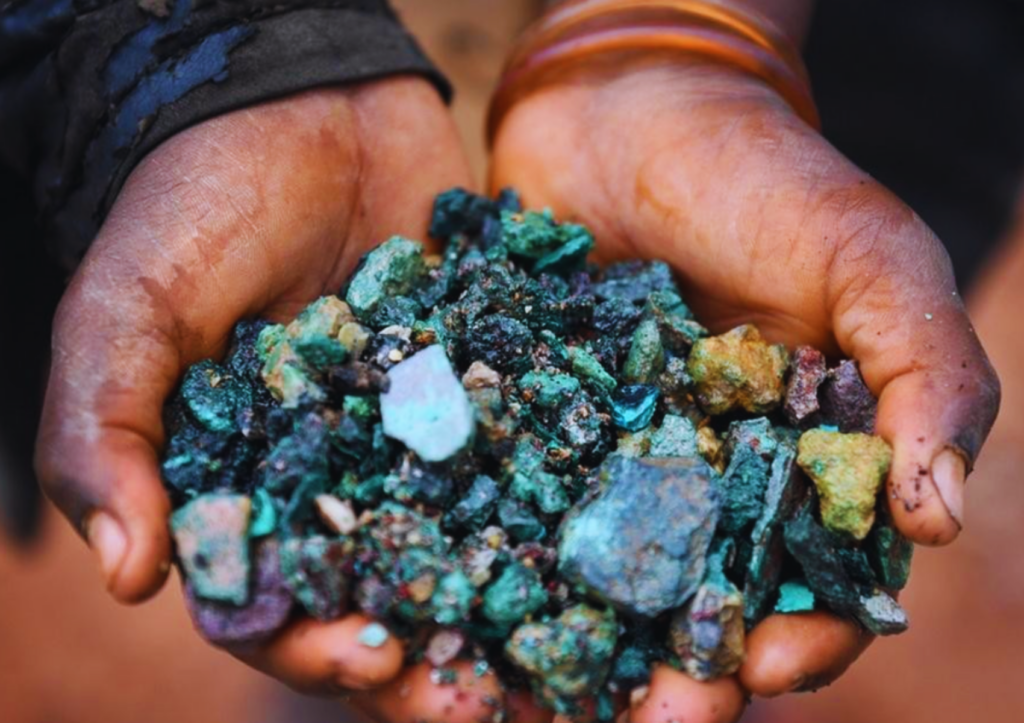
The DRC’s cobalt and copper reserves are, at this specific moment, among the most strategically valuable assets on earth. China processes roughly 78% of global refined cobalt and has historically controlled approximately 80% of Congolese cobalt production. The US-DRC Strategic Partnership Agreement, signed in December 2025, represents Washington’s attempt to restructure that supply chain. Cobalt prices have more than doubled in eighteen months. The US-China competition over battery supply chains and defence mineral requirements gives the DRC bargaining power between two major buyers that it has not previously possessed.
But the leverage is conditional, and the conditions are fragile. The Rubaya coltan mine — responsible for roughly 15% of global coltan production — remains under M23 and AFC control. Any investment architecture requiring a stable, coherent Congolese state runs directly through a peace process that has stalled repeatedly, in which Rwanda’s role remains contested, and in which the artisanal mining economy — employing over ten million Congolese — was directly disrupted by the suspension of processing centres as a condition of meeting US responsible sourcing standards.
The utilitarian argument for the DRC is about the terms of engagement, not the fact of it. Engagement with the US, China, the EU, and any actor that needs what the Congo holds is right. The question is whether that engagement is structured as a sovereign negotiation or a dependent concession. The implementation details of the current SPA reveal the difference: artisanal mining centres suspended to meet US investor standards, over ten million livelihoods threatened, and a military entanglement risk that analysts have compared — explicitly — to Afghanistan and Iraq.
The DRC’s moment of maximum mineral leverage is also its moment of maximum fragility. The country must insist, in every future minerals agreement, on three non-negotiables: domestic processing requirements that build beneficiation capacity inside the Congo, a community development levy that rebuilds eastern DRC rather than funding national budget lines, and an artisanal mining regularisation programme that brings small-scale miners into the formal economy rather than eliminating them as a condition of Western investment access.
Those three conditions are not idealistic demands. They are the minimum requirements for a minerals agreement that serves the welfare of the Congolese rather than extractive external supply chains. They are also the conditions most likely to produce the governance stability that sustains long-term investment, which is ultimately in the interest of every party, including the US government, if its planners are thinking beyond the next three-year defence procurement cycle.
V. SADC’s Critical Minerals Beneficiation Protocol
The SADC Council of Ministers, meeting in Pretoria in the immediate aftermath of the Iran war’s escalation, agreed to a special session of foreign ministers to define a coordinated regional response. South African Foreign Minister Ronald Lamola explicitly called for transformation, processing, and the creation of added value from the region’s critical minerals rather than raw material export. That is the right argument. The specific policy instrument that converts it from a ministerial declaration into an operational framework is a SADC Critical Minerals Beneficiation Protocol: a binding regional agreement requiring a minimum percentage of critical minerals mined in SADC member states to be processed within the region before export, with a shared investment programme for processing facilities financed through a regional minerals levy and multilateral development bank co-investment.
The model for this already exists on the continent. Morocco’s OCP was once an exporter of phosphate rock. It is now an exporter of fertiliser, phosphoric acid, and speciality chemicals, with export revenues substantially higher per tonne and a domestic industrial base that employs tens of thousands of people. The cobalt and copper belt of the DRC and Zambia could follow the same trajectory. The difference is institutional will and coordinated investment — both of which the current crisis has elevated from academic discussions to political urgency.
The AfCFTA provides the legal framework for a minerals-processing corridor. The Lobito Corridor railway, connecting the DRC’s copper belt to the port of Lobito in Angola, provides the logistics infrastructure. The DRC-South Africa Industrial Development Corporation memorandum, signed in February 2026, provides the bilateral investment framework. The question is whether SADC can move from individual bilateral agreements to a collective beneficiation commitment that gives the region genuine negotiating leverage against the US-China competition over critical mineral supply chains.
VI. Zambia, Zimbabwe, and the Portfolio Argument
Zambia is the world’s second-largest cobalt producer after the DRC, and holds copper reserves among the world’s most significant. Its re-admission to the HIPC completion point in 2025 after debt restructuring gives it fiscal space it has not had in years, and elevated copper and cobalt prices are generating windfalls at precisely the moment when macroeconomic stability provides the foundation to invest them without triggering another debt spiral. The utilitarian question for Zambia is the same one Opalo asks for Nigeria: does the windfall get absorbed by recurrent expenditure and elite distribution, or does it get invested in the processing infrastructure that converts mineral extraction into industrial development?
Zimbabwe holds the world’s fifth-largest lithium reserves. Global lithium demand is growing at close to 30% annually. The energy transition has made lithium one of the most urgently needed battery minerals worldwide, and Zimbabwe’s deposits are among the most significant outside Australia and Chile. Zimbabwe has historically struggled to convert this geological advantage into economic development. The Iran war’s acceleration of the energy transition, combined with the US-China battery supply chain competition, creates a window for Zimbabwe to attract anchor investment in lithium hydroxide and carbonate processing — value-added exports rather than spodumene ore — on terms that are more favourable than were available eighteen months ago.
The SADC mineral endowment — DRC cobalt, Zambia copper, Zimbabwe lithium, South Africa gold and PGMs, Botswana diamonds, Namibia uranium — managed collectively under an AfCFTA minerals protocol creates more negotiating leverage than any single country bargaining alone. The EU’s Critical Raw Materials Act and the US Inflation Reduction Act are designed to extract African minerals at the lowest possible price and process them elsewhere. The only rational response is collective bargaining, not individual competition for investor favour.
VII. The Utilitarian Imperative for Southern Africa
AfCFTA Secretary General Wamkele Mene said, in the days after the strikes, that Africa is on its own as a continent. For Southern Africa, that statement carries specific and measurable economic content. The region holds the minerals that power the next economy. It sits on the shipping route that has become the world’s most important alternative to the closed Hormuz corridor. South Africa has an industrial economy with a manufacturing base, a financial services sector, and the institutional capacity to anchor a genuine regional economic transformation.
What Southern Africa does over the next eighteen months will not be determined by the war in Iran. It will be determined by the decisions that SADC governments, business leaders, and institutional investors make about whether to treat the current crisis as a temporary disruption to be managed or as the forcing function for the structural changes that a utilitarian Pan-Africanism demands: aggressive intra-regional trade, mandatory beneficiation requirements, serious port infrastructure investment, and the conversion of the SADC framework from a diplomatic talking shop into a coordinated economic bloc with executive rather than advisory powers.
The countries that emerge from this period with lasting advantage will not be those that navigated the oil price spike most cleverly. They will be those who used the disruption to build supply chains, processing capacity, port infrastructure, and payment architectures that make the next external shock less penetrating. That building is possible now. It requires decisions that fall within the executive authority of existing governments and boards. It requires that those decisions be made at the speed of the crisis rather than the speed of the consultative process.
Pan-Africanism must stop performing and start producing. Power, not poetry. Action, not applause. The measure of this generation of African leadership will not be the quality of its declarations about sovereignty and transformation. It will be whether the fertiliser reached the farmer before the planting window closed.