


What the US-Israel assault on Iran means for Africa — and why Opalo is right that the only answer is to stop waiting for the world to be fair
A Distant War Arrives at the Pump
On the morning of 28 February 2026, the United States and Israel launched coordinated strikes on Iranian territory under an operation they named Epic Fury. The name was theirs. The consequences are ours.
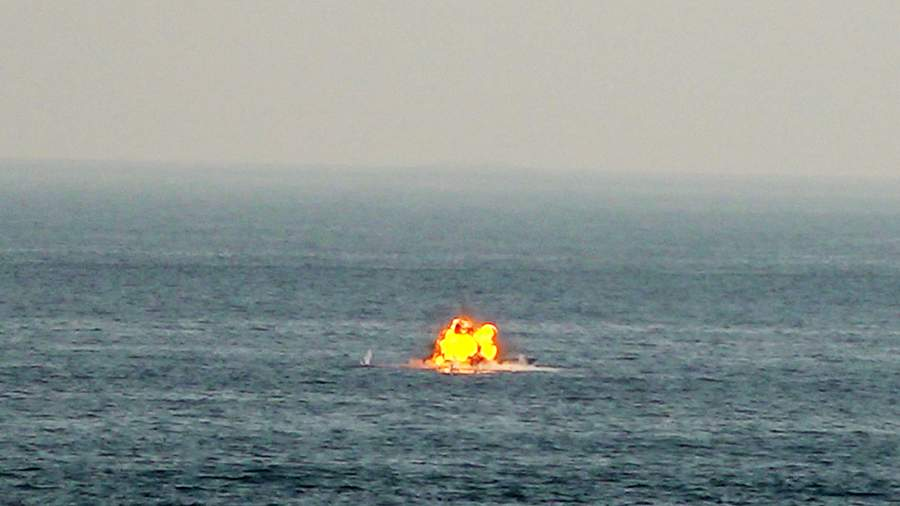
Within forty-eight hours, the price of a barrel of Brent crude had crossed eighty-five dollars, up from seventy-three the previous week. Within a fortnight, it crossed $100 for the first time in years, briefly touching $120. The Strait of Hormuz — the forty-kilometre-wide channel of water that is, effectively, the world’s most consequential plumbing — was declared closed to vessels from the United States and its allies by Iran’s Islamic Revolutionary Guard Corps. Commercial shipping traffic, which normally runs at over a hundred vessels a day, fell to fewer than three. The closure was achieved not by mines or a naval blockade but by cheap drones and an insurance industry that correctly concluded that the waterway was no longer navigable at an acceptable risk.
Africa did not choose this war. No African government was consulted on the decision to launch the strikes. No African parliament voted on whether the world’s energy chokepoint should be put at risk. And yet, from Nairobi to Lagos to Cape Town to Kinshasa, the consequences of that decision are being felt in fuel price rises, fertiliser shortfalls, weakening currencies, and disrupted supply chains. That disproportion — between who made the decision and who pays the cost — is not an accident. It is the structural description of Africa’s position in the global economy: exposed to every shock, shielded from none.
The disproportion between who made the decision and who pays the cost is not an accident. It is the structural description of Africa’s position in the global economy: exposed to every shock, shielded from none.
Ken Opalo, writing in his newsletter An Africanist Perspective, identified the essential point with his characteristic clarity: a long war is likely, its impacts will have long lags, and the only rational African response is regional resilience. He is right. But resilience, as I have argued before in these pages, is not a passive condition you settle into while waiting for the storm to pass. It is a thing you build. Aggressively, deliberately, and with the full understanding that the world will not become fairer by itself.
I have written — in my response to Opalo’s earlier analysis on African international organisations, and in my broader argument for a utilitarian Pan-Africanism — that the problem with African institutions is not a deficit of vision. It is a deficit of use. The AfCFTA exists. PAPSS exists. The EAC, ECOWAS, and SADC exist. The question has never been whether the architecture is there. The question is whether we will treat it as an emergency instrument or continue to treat it as a diplomatic aspiration that awaits the consensus of fifty-four heads of state before it does anything.
Two Bodies of Water You Need to Understand
Before the analysis, the geography, because too much of the commentary on this crisis assumes a familiarity with the physical world that many readers do not have, and that omission lets policymakers off the hook.
The Strait of Hormuz is a narrow channel of open water, roughly forty kilometres across at its tightest point, separating the coast of Iran from the coast of Oman. Every oil tanker departing from Saudi Arabia, the UAE, Kuwait, Qatar, and Iraq must pass through it. There is no bypass. Approximately one-fifth of the world’s crude oil and liquefied natural gas transits this corridor daily — around twenty million barrels of oil and a substantial share of global LNG supply. Qatar, which produces more LNG than any country on earth, ships its entire output through the strait. The Gulf’s fertiliser industry, which produces over a third of the world’s traded urea, sends it all through the same channel.
Imagine that the entire economic output of a city of fifty million people can only leave by one road. One road. No bypass, no alternative, no second gate. If that road closes, the city’s economy does not slow — it stops. The Strait of Hormuz is that road. As of March 2026, it has effectively closed.
Iran achieved this closure not with overwhelming force but with relatively modest asymmetric pressure. A few drone strikes in the vicinity of the waterway were sufficient: insurers withdrew war-risk cover, shipping companies suspended operations, and captains stopped sailing. The closure has an important further dimension — Iran has selectively granted passage to countries it wishes to keep on side, including China, India, Turkey, and Pakistan, while denying it to Western-aligned vessels. This makes the closure a geopolitical instrument rather than a physical impossibility, and it means the situation can shift by diplomatic negotiation faster than the headlines suggest.


The Cape of Good Hope is the southernmost point of Africa, where the Atlantic and Indian Oceans meet off the South African coast. Before the Suez Canal was built in 1869, all trade between Europe and Asia sailed around it. The canal made the Cape route obsolete for most commercial purposes. But when the Suez corridor becomes dangerous — as it did during the Houthi attacks on Red Sea shipping in 2024, and again now as disruption to the Strait of Hormuz has destabilised the entire Indian Ocean trade lane — shipping reroutes around Africa’s southern tip. As of early March 2026, up to two-thirds of global shipping traffic has done exactly that.
Cape Town’s port reported a 112% increase in diverted vessels in a single fortnight. The detour adds roughly ten to fourteen days and between 3,500 and 4,000 nautical miles to a voyage from Asia to Europe. It adds cost, time, and uncertainty to everything: consumer electronics, industrial machinery, pharmaceutical raw materials, and seasonal food. For African ports and governments, this rerouting is simultaneously a strain on import logistics and a strategic opportunity — provided the infrastructure to capture it actually exists, which, in most cases, it currently does not.
The Five Ways the Shock Reaches Us
The Iran war’s impact on African economies does not arrive as a single wave. It arrives as five overlapping transmission channels, each operating on a different timeline, each reinforcing the others.
The fuel price pass-through
Africa is overwhelmingly a net importer of refined petroleum products. When Brent crude moves from seventy-three to over one hundred dollars per barrel, the cost of every litre of diesel and petrol rises accordingly. Road transport carries the vast majority of food and goods across the continent — there is no rail alternative in most markets — so higher fuel prices become higher food prices within weeks. Kenya’s Energy Cabinet Secretary confirmed reserves sufficient only through April 2026. Ghana, which spent three years rebuilding its international reserves from near-collapse, watches that buffer erode as the import bill rises. These are not hypothetical pressures. They are arriving now.
Shipping cost and route disruption
The rerouting around the Cape adds freight surcharges, war-risk insurance premiums, and extended lead times to every container entering or leaving the continent. For Kenyan horticultural exporters — cut flowers, green beans, avocados, whose entire commercial model depends on just-in-time delivery to European supermarkets — adding three weeks to the voyage is not an inconvenience. It is a contract default. Buyers cancel. Cold chains fail. Quality degrades. The losses are immediate and direct.
Currency and capital pressure
Global risk events drive investors into the US dollar. A stronger dollar inflates the cost of every dollar-denominated import, which is to say, most of what African economies buy from outside the continent. South Africa’s rand fell to its weakest level since December 2025 in the first days of the conflict. Kenya’s monetary policy space, built on 425 basis points of cumulative rate cuts since August 2024, has narrowed sharply as second-round inflationary risks mount. The central bank cuts that were overdue last month are now on hold.
The fertiliser shock
This is the transmission channel receiving the least attention in mainstream commentary, and it will prove the most damaging over the following twelve months. The Strait of Hormuz carries over one-third of the world’s traded fertiliser. Qatar, Saudi Arabia, the UAE, and Iran together produce an enormous share of global urea and phosphate output, and all of it transited through the now-closed strait. Urea prices rose 37% within a week of the conflict escalating. For Africa, where over 90% of fertiliser is imported, and application rates already stand at roughly one-seventh of the global average, the consequence is not a market adjustment. It is a food-system shock that will manifest as reduced harvests six to twelve months from now, long after the oil price headlines have moved on.
Energy markets can absorb shocks through reserves and substitution. But the global food system has far thinner buffers. A prolonged disruption at Hormuz does not simply reprice crude oil — it tests the resilience of the industrial nitrogen cycle on which modern agriculture depends. Africa, which already uses less fertiliser per hectare than anywhere else on earth, will feel the full force of that test.
The slow contraction of Gulf investment flows
Qatar had committed over $100 billion to African projects as of 2025. Gulf sovereign wealth funds had invested a comparable sum in Africa’s renewable energy sector by the end of 2024. These flows are not guaranteed to persist if GCC states turn inward to manage their own security and fiscal pressures. The infrastructure projects that are not financed in 2026 do not simply get delayed by 12 months — they reshape investment pipelines and planning assumptions for a decade.
The Country Map: Who Gains, Who Bleeds, Who Wastes Their Moment
The crisis does not affect the continent equally. Understanding the asymmetries matters because the policy responses they demand are also asymmetric.
Kenya faces a structural emergency that is almost entirely the product of dependency rather than mismanagement. Over 80% of its refined petroleum arrives from the Gulf. Its fertiliser import routes run through the same disrupted corridor. Its perishable export economy depends on just-in-time shipping routes now extended by three weeks. The US maintains a military installation in Lamu County — currently undergoing a $71 million expansion — that appears on Iran’s publicly stated list of potential proxy targets. Kenya’s tea exports to Iran reached 6.8 billion shillings in 2023 and were actively growing as recently as two months before the war; choosing sides carries commercial and diplomatic costs in both directions. Kenya’s situation demands not crisis management but a fundamental rethinking of its energy and food supply architecture — and it demands it immediately, not after the conflict resolves.
Nigeria sits in the most paradoxical position on the continent. As Africa’s largest oil exporter, it stands to gain significantly from elevated crude prices: the Nigeria Economic Summit Group estimates additional revenues ranging from roughly 2.3 trillion naira under a short conflict to thirty trillion naira if the war becomes protracted, with Bonny Light already trading well above the $64.85 per barrel budget benchmark. But Nigeria’s actual output runs roughly 20% below its own budget projection, limiting the windfall in practice. And its citizens are already paying close to 1,400 naira per litre for petrol as deregulated domestic prices track global markets upward. The country with the most to gain economically from the crisis is simultaneously failing to capture the revenue, failing to protect its households, and — most consequentially — sitting on fertiliser production capacity that could serve food-insecure neighbours across West and East Africa, without having mobilised it.
Ghana has spent three years rebuilding from one of the most severe economic contractions in its modern history, when inflation peaked at 54% in December 2022. By February 2026, inflation had fallen to 3.3% — the lowest since August 1999 — and gross international reserves had rebuilt to 5.7 months of import cover. That recovery is now directly threatened by a shock that Ghana’s domestic monetary policy has no power to resolve. Gold’s surge above $5,400 per ounce provides a genuine safe-haven buffer. The question is whether Ghana manages the tension between protecting the recovery and seizing the opportunity, or simply absorbs the external shock passively and calls it resilience.
The DRC holds approximately 71% of the world’s cobalt reserves. It produced over 70% of the global cobalt supply in 2024. Refined cobalt prices have more than doubled since early 2025. The US-DRC Strategic Partnership Agreement, signed in December 2025, designates the country a strategic partner and grants American companies preferential access to unlicensed mining areas. The leverage is real and historic. But the Rubaya coltan mine — responsible for roughly 15% of global coltan production — remains under M23 control, and any investment architecture that requires a coherent, stable Congolese state runs directly through a peace process that has failed repeatedly. The DRC’s moment of maximum leverage is also the moment of maximum risk.
South Africa faces the most asymmetric situation: rand depreciation and delayed monetary easing on one side, and a projected R300 to R350 billion windfall from gold and platinum group metals on the other. Two-thirds of global shipping now rerouting through the Cape creates a maritime infrastructure opportunity of genuine historic dimensions. The constraint is not imagination. It is ports that cannot handle the traffic, a mining sector operating at 10% of 2010 production levels due to regulatory paralysis, and an institutional culture in which the response to an urgent commercial opportunity is a ministerial working group rather than an executive decision.
Opalo’s Argument — and the Step Beyond It
Ken Opalo’s newsletter makes the essential diagnosis. The cadence of global crises will accelerate. The political will to solve them through international cooperation is declining. The only rational response is regional resilience — built, he argues, through self-sufficiency in fuels and fertiliser, African port networks repositioned as alternatives to global trade, and a geopolitical posture of strict strategic independence.
I agree with the diagnosis, and I want to be precise about where I think we need to go further.


The AfCFTA Secretary General Wamkele Mene put it plainly in the days after the strikes: “We are on our own as a continent.” That is not defeatism. It is the condition of strategic clarity from which action must proceed. The question is whether African governments treat that condition as an emergency or a talking point.
Opalo is careful to distinguish his argument from naive Pan-Africanism — and rightly so. Africa’s continental institutions have spent decades producing communiqués about integration while the trade infrastructure that would make integration real remains unbuilt. The AU is structured, as I have argued previously, like a debating society that fears its own agency. Consensus and equality have become tools of inertia. Fifty-four presidents, each clutching sovereignty like a relic, meet to reaffirm policies they will not implement.
Pan-Africanism in Action
The utilitarian turn I have been calling for is the response to this paralysis. Pan-Africanism must stop performing and start producing. It needs to be measured not by the sentiment it expresses but by the welfare it generates. The test is simple and brutally practical: How easily can a maize trader in Kampala sell to a buyer in Nairobi? Can fertiliser from Morocco reach a Tanzanian farmer through a cheaper mechanism than the one the Gulf supplied last season? Can a Kenyan shipper route cargo through Dar es Salaam as efficiently as through Dubai? Can a business in Accra settle a transaction with a supplier in Addis in local currencies without losing value to dollar conversion?
Those are not rhetorical questions. They are the operational definition of African regional resilience. And they are answerable — right now, using the AfCFTA framework, PAPSS, Afreximbank’s trade finance instruments, and the existing regional economic community secretariats — if the political will to treat them as national security matters rather than trade policy conversations can be found and held.
Coming Up…
The remaining three essays in this series turn to specific regions and specific actions. They are not aspirational frameworks. They are proposals — in some cases deliberately provocative ones — for what policymakers and business leaders in East Africa, West Africa, and Southern Africa can do within the next eighteen months to convert the Iran war’s disruption into the structural opening it contains. The research is grounded in what Africa actually produces, actually owns, and actually has the institutional capacity to move. What it does not yet have is the urgency that this moment demands. These essays are an argument for that urgency.